
Also known as horseradish, by the peoples of the north, or as barbaforte in the central areas, with the latter indicating a “strong” preference for beards!
Lucania is no exception: its spicy root is It is mainly grown in the Val d’Agri, in the Lagonegro area, and in the Vultures.
The range of colloquial names used to refer to it, particularly in Italy, is certainly complex: this proliferation of names is also due to dialectal variations. In central Italy, it is generally referred to as Barbaforte, Radicofica, Pizzicalingua, Armoraccia. Liguria uses Armuassa, Ravanasso; Piedmont Capussin Mustard or Radish Mustard; Lombardy Creen, Cren or Kren, Similarly, in Trentino-Alto Adige, the root is used for various culinary and herbal medicinal purposes.
This plant is also found in Sicily, where it is known as Country-style horseradish or Eastern; always Horseradish is indicated in the rest of the south.
In literature, too, the most common colloquial term is ‘cren’ or simply Horseradish, country horseradish or German horseradish.
The history of horseradish
The origins of this aromatic root are shrouded in mystery.
In the past, it was referred to as horseradish o monks’ mustard, precisely because it replaced the seeds of the Sinapsis alba (white mustard), a key ingredient in mustard and mostarda.
What is certain is that it was already known in ancient times: Egyptian slaves, as far back as 2600 BC, are said to have refreshed themselves with horseradish at the end of the day whilst building the Pyramid of Cheops. Its energy-boosting properties are still regarded as valid and effective today, as evidenced by the fact that farm labourers were able to see their working days through precisely by consuming large quantities of the roots.
The Greeks were no exception, having mentioned it around 1000 BC, and neither was Britain, which was using this root long before the arrival of the Romans.
Some theories suggest that horseradish has even more ancient origins: it is said to have originated in the Middle East before travelling north via the Mediterranean. Northwards, it passed through Germany and Normandy, whose people – the Normans – arrived in Italy, including Basilicata, where, thanks to the climate and abundance of water, the root may well have taken root easily. In fact, it grows wild almost everywhere, especially in cool, water-rich areas such as the Apennines. A Power It is also known as “the poor man’s truffle”.
In the In the Middle Ages, ‘barbaforte’ was commonly used in convent pharmacies: The herbalist friars used it in their medicines not only for its actual properties but also because, perhaps, the Its flavour and pungent aroma lent greater credibility to any potion that was brewed, as if they implied something “magical” or “diabolical” (Magrini, 1988).
The health benefits of horseradish
Horseradish belongs to the family of Cruciferae, such as cabbage and broccoli, with which it therefore shares the same properties.
Among the main ones is the ability to to combat cardiovascular disease by reducing the main risk factors: cholesterol and triglycerides.
There are numerous other much-praised properties:
- antibacterial
- antibiotic
- anti-anaemic
- decongestants
- anti-fatigue
- anti-rheumatic
- anti-scurvy
- cough syrups
- sedatives
- detoxifying
- digestive
- diuretic
- students
- eupeptic
- revulsive
- rubefacient
- scialagogues
- stimulants
- laxatives
- aphrodisiacs (Ovid himself recommended them, to achieve plant-based aphrodisiac filters and the Kama Sutra mentions it in a recipe involving honey and milk)
This aromatic root is very effective against infections:
- gastrointestinal infections caused by contaminated food (including the extremely dangerous Escherichia coli bacterium
- of the urinary tract
- of the respiratory tract
- pharyngitis
Also used in the natural cosmetics and in the field of traditional medicine as a mild remedy for skin blemishes, herpes-related skin conditions and alopecia.
The cultivation of horseradish
It’s actually very simple: you need to have a Well-drained, crumbly soil, in a cool or partially shaded spot.
The recommended period for the Spring is the time for sowing or, in any case, a period when there is no longer any frost or hoarfrost.
As horseradish is a root vegetable, it is advisable to space the plants at least 30 cm apart to prevent them from becoming entangled. If planting in several rows, it is best to space these at least 50 cm apart.
For the Compost is also ideal for fertilising, and do remember to water frequently. The large amount of water required for its growth can also be explained by the fact that, water is its main component, accounting for approximately 95%, along with proteins, fibre and vitamin C in large quantities – when eaten raw, as recommended, since when dried it loses some of its properties, particularly its supposed antibiotic action.
The Harvesting is best carried out in the autumn and, if you wish, it would be advisable to wait a couple of years to allow the plants to grow and develop roots of around 15–20 cm. Obviously, in that case, it is almost It is essential to repair them during the coldest months when there is a risk of frost.
Methods of preservation
It is necessary to Clean and rinse the roots thoroughly and then store them in a a slightly damp cloth and leave them in the fridge for 4 or 5 days, before using them in the kitchen.
Another method involves Place the rootstocks in a dry container, alternating the layers with sand or straw, to prevent the roots from coming into contact with one another (especially if any of them are rotten, to avoid contamination). To allow for aeration, The container should not be covered and should be stored in a cool but dry place.
The freezing This is just as effective: the roots should always be cleaned before being placed in bags.
Last but not least, the dehydration. Once you have washed and dried the roots, simply Leave them in the sun for a few days and store them in a sealed glass jar. However, we recommend consuming it within a few weeks to ensure it remains fresh.
Please note that horseradish retains its properties when eaten raw: even drying reduces them considerably.
Contraindications
When applied externally, horseradish acts as a revulsive; therefore, it should be used with caution, as irritation – or even the formation of blisters – is not uncommon if used in excessive amounts.
People suffering from chronic stomach conditions (ulcers, gastritis, etc.), bowel disorders or thyroid problems should also avoid using this spice; it should also be avoided by people who are generally nervous, and by women (during pregnancy and whilst breastfeeding) to avoid the risk of transferring unpleasant odours and flavours to their milk.
Although horseradish stimulates bile production, it may not be suitable for those suffering from heartburn. In such cases, it is best to consult your doctor and try to understand how your body might react to it.
Finally, people with hypothyroidism are advised not to consume horseradish.
The use of horseradish in Basilicata
In Basilicata, horseradish is used both as a spice that, like medicine. His extract It has been used by the “grandmothers” of the Lucania region for centuries as a juice or decoction, or macerated in white wine, to combat anaemia and rickets, rheumatism and sciatica. It is also used as an antiscorbutic, emollient and expectorant.
Barbaforte is generally used freshly grated over pasta dishes with a meat sauce and, so that it can be enjoyed all year round, it is preserved in oil. Alternatively, if you prefer, you can work to make a sauce which can also be used to season the main courses, whether meat, fish or eggs, or even other vegetables.
It’s still possible for making salads and dressing minestrone; it can be mixed with vinegar, salt, mayonnaise or other dressings. We can say that this ingredient has made a powerful entry into traditional “peasant” cuisine – only to go on to “influence” even other, far more “prestigious” dishes!
The root, inside, it has a a whitish colour and a rather mild flavour. È It is by crushing, chopping or grating it that its spicy essence is released (butyl sulphocyanate), which may cause irritation to the mucous membranes and watery eyes.
Another typical dish from Basilicata is rafanata. Click on the links below to discover these tasty recipes!
- Horseradish sauce
- The radish salad
Interesting facts about horseradish
Many of you will be familiar with the wasabi sauce, that is to say, that green sauce of Japanese origin which has also found its way to Italy. Outside Japan, it is prepared using horseradish, as this seems to be the only ingredient capable of replacing the root of the Wasabia japonica, which is rare and also expensive.
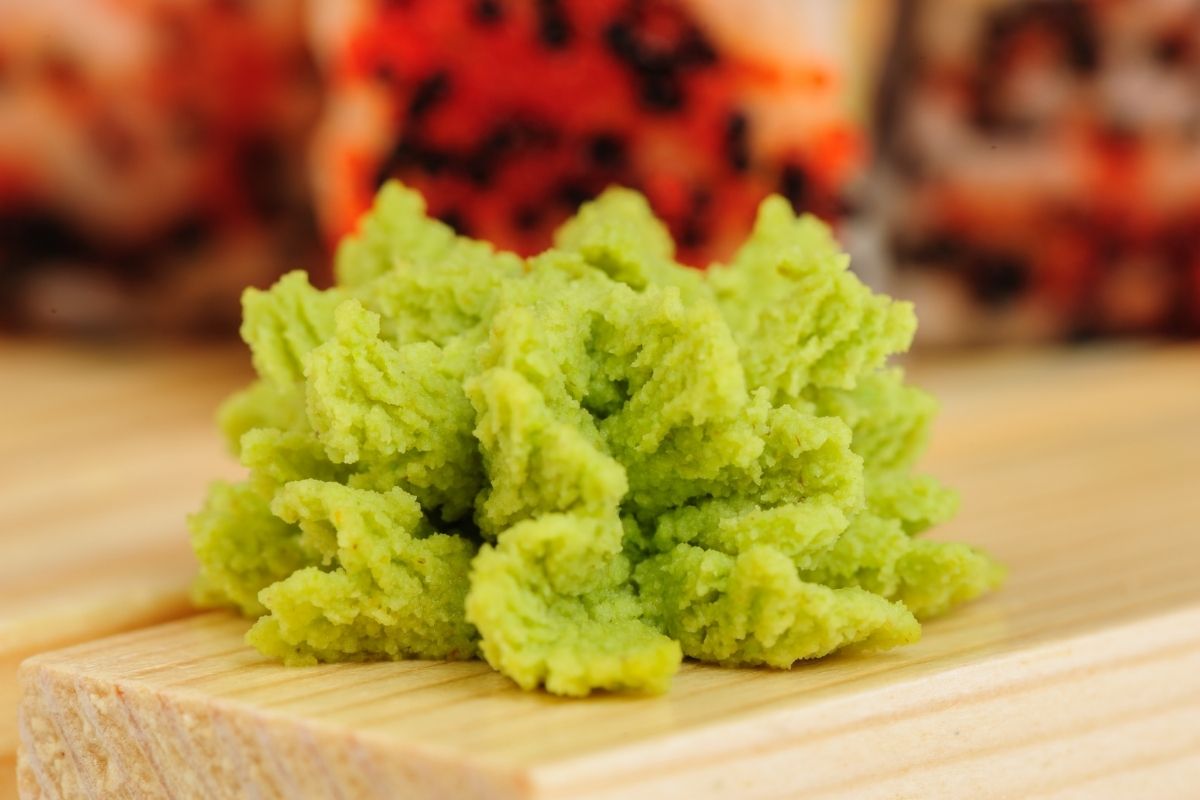
For centuries, horseradish was also used as a spicy condiment, as other spices known today – such as pepper, ginger and mustard – had not yet been imported.
In fact, in Bavaria, in Baiersdorf, “The World’s Spiciest Museum” has been created, dedicated to the ‘barbaforte’, which, according to legend, was weighed in gold by the gods.
Radishes are worth their weight in lead, beetroot their weight in silver, and horseradish their weight in gold
In thea popular Tuscan classic the expression used to be
No horseradish!
to indicate trouble, which can be translated as
I am surrounded by flames
with regard to the pungent flavour and irritating properties of the essential oils contained in the root of the wild horseradish.




