
The museum collects and organises, on its own premises, a an archaeological overview spanning the history of the Metapontino area from prehistoric settlements to late antiquity.
The way the museum is organised enables visitors to appreciate the differences and diversity that characterise the ethnic groups which inhabited the Ionian coast in antiquity, whilst also seeking to understand the extent to which they gradually integrated culturally.
Ancient period
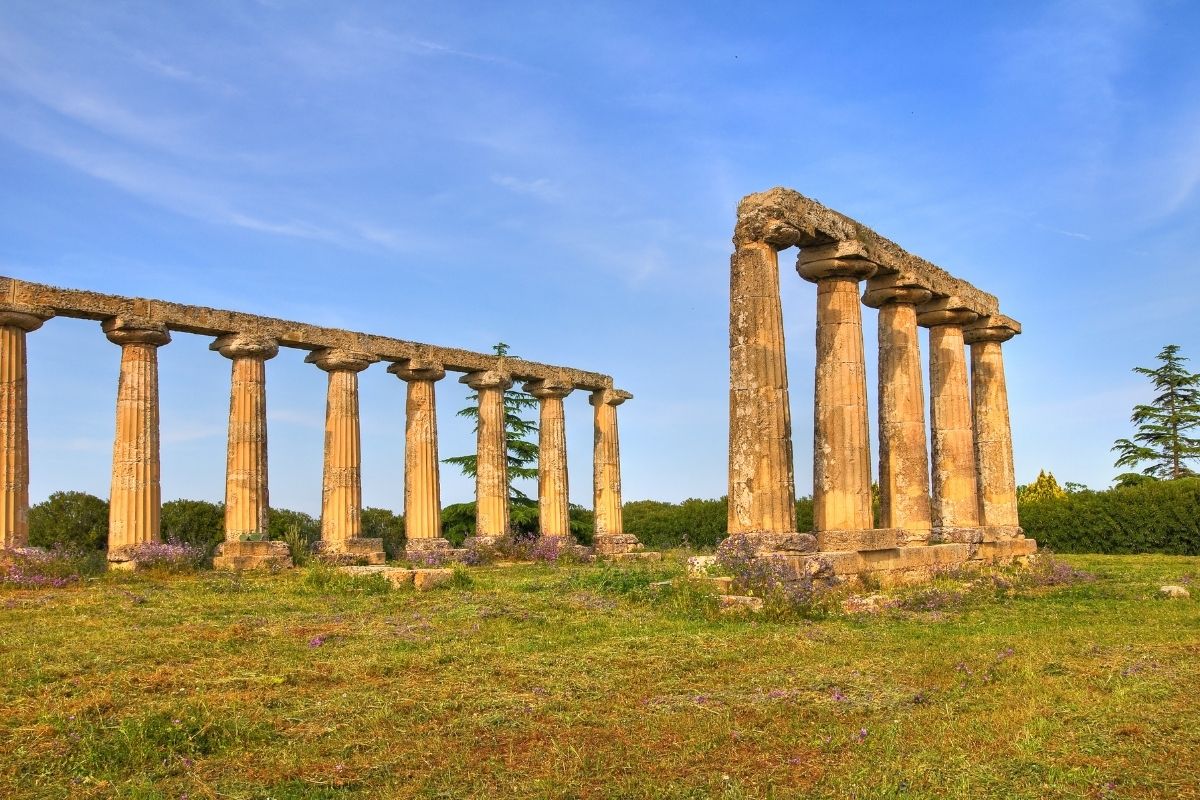
A Pisticci, on the Incoronata hill, there are signs of a recovery in contacts with the Greeks: There are a few examples of this imported Corinthian vases dating from the second half of the 8th century.
The most significant transformation took place over the following century, thanks to the presence of craftsmen and traders from the East.
Among the most interesting depictions are the krater showing Bellerophon riding Pegasus and the monumental basin featuring relief scenes from mythology (Perseus and Medusa), the *Iliad* and the *Odyssey* (the battle to recover a hero’s body; Odysseus receiving the magic potion from the sorceress Circe; a couple on a chariot drawn by winged horses, perhaps the wedding of Peleus and Thetis, the parents of Achilles).
The legend, including through images, is used to lay the groundwork for an understanding or to rekindle the memory of a long-lost sense of familiarity.
It is also worth noting the destruction of the Incoronata area, which coincided with the Achaean founding of Metaponto at the instigation of the Sybarites.
I materials The evidence presented proves that the gap which, in the Archaic period, is expressed between the way of life of the aristocracy and that of the Oenotrians. On the one hand, there is a great deal of functional simplicity in the choice of objects comprising the grave goods (a sword or knife for cutting meat, an oinochoe and a phiale for ritual purification ceremonies); Conversely, on the other hand, there is an extreme emphasis on luxury (tryphè) in lifestyle and personal adornment.
Classical and Hellenistic period
In other words, that “bridge” to new, more individual forms of religion geared towards the salvation of the soul. Indeed, scenes of feasting or of overtly esoteric significance are depicted (the presence of Orpheus, Dionysus, Demeter, and the birth of Helen from an egg).
The Italics, on the other hand, showed an interest in new forms of worship, whilst retaining their tendency towards exuberance and a keen interest in personal adornment.
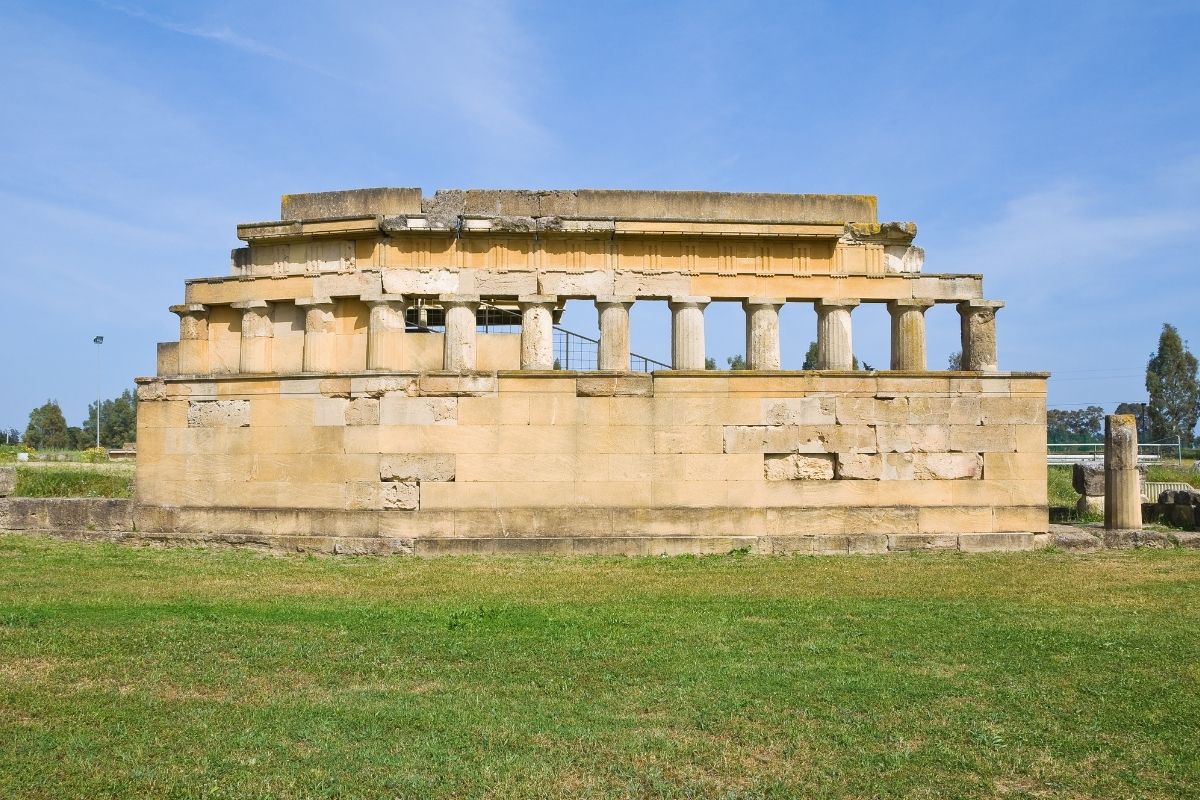
Roman conquest
The Roman invasion is literally devastating, starting with the loss of the city’s political and economic autonomy which has been reduced to a simple port settlement at the mouth of the River Basento.
The Agora – the square – is home to a a group of burials that indicate an interest in personal care items. In this regard, it is worth mentioning a set of grave goods from a woman’s tomb, comprising small glass vials and spatulas used for preparing face creams.
Towards the end of the tour, there is a section devoted to ceramic-making techniques. Metaponto has always been renowned for the quality of its clay and the professionalism of its craftsmen, producing and exporting vessels for everyday use and of considerable artistic merit, intended for the Italic elite, via the main centres of southern Italy.
Cover photo: Metaponto National Archaeological Museum. Author: By Asia – Own work, CC BY-SA 4.0




