
Bed and breakfast with a hot tub in Bernalda. We are situated about a 30-minute drive from the city of Matera, in a strategic location for visiting the coast, the hinterland and the mountains. The B&B with an in-room whirlpool bath in the Mad Suite in Bernalda is situated in a prime location, close to Matera, Craco, Pisticci, Metaponto and Policoro, Tursi and just 40 minutes from the most picturesque mountain destinations in the Basilicata.
Matera is a city in southern Italy, situated in the Basilicata region, best known for the “Sassi di Matera”, an ancient neighbourhood characterised by houses and churches carved out of tuff rock.
The Sassi district was designated a UNESCO World Heritage Site in 1993 and has become the city’s most iconic symbol. Matera has been inhabited since the Palaeolithic era and is one of the oldest cities in the world. Its unique history and charm make it a highly popular tourist destination both in Italy and abroad.
Matera is a city situated in the Basilicata region, in southern Italy. Its history dates back to ancient times: it is thought that the area was already inhabited as far back as the Palaeolithic era, some 20,000 years ago. In the Neolithic period, the area was home to cave-dwelling communities who settled in caves.
Over the centuries, Matera was conquered by numerous peoples: the Lucanian tribes, the Greeks, the Romans, the Lombards, the Normans and the Swabians. In the 15th century, during the Aragonese rule, Matera became a fortified town.
In the 19th century, the town began to grow, but the housing situation was appalling. The inhabitants lived in dreadful conditions, in caves hewn out of the rock, without sanitation or comforts. Those who survived a cholera epidemic in 1854, which caused a huge death toll amongst the people of Matera, decided to bring about change, and the town was transformed into a modern city. The old caves were abandoned, whilst the first modern dwellings were built. However, the situation did not improve entirely, and in the 20th century a mass exodus of the population began towards cities in northern Italy or other countries in search of work and better living conditions.
In the 1950s, Matera became known throughout the world for its poverty and the living conditions of its inhabitants. In 1952, a film crew came to Matera to shoot Luchino Visconti’s film *La terra trema*, bringing the city to the attention of the whole world and the Italian authorities, who then realised the gravity of the situation.
Following the film and numerous petitions from intellectuals and artists such as Carlo Levi and Pier Paolo Pasolini, an urban regeneration plan was drawn up in 1952, which required many years of funding. Thanks to international funding from the EU, Matera was redeveloped and, in 1993, became a UNESCO World Heritage Site.
Furthermore, the city has experienced an economic revival thanks to the growth of tourism. Today, Matera is a thriving city, known for its historic neighbourhoods and its famous ‘Sassi’, which nevertheless also harbour a history of poverty and difficult living conditions.
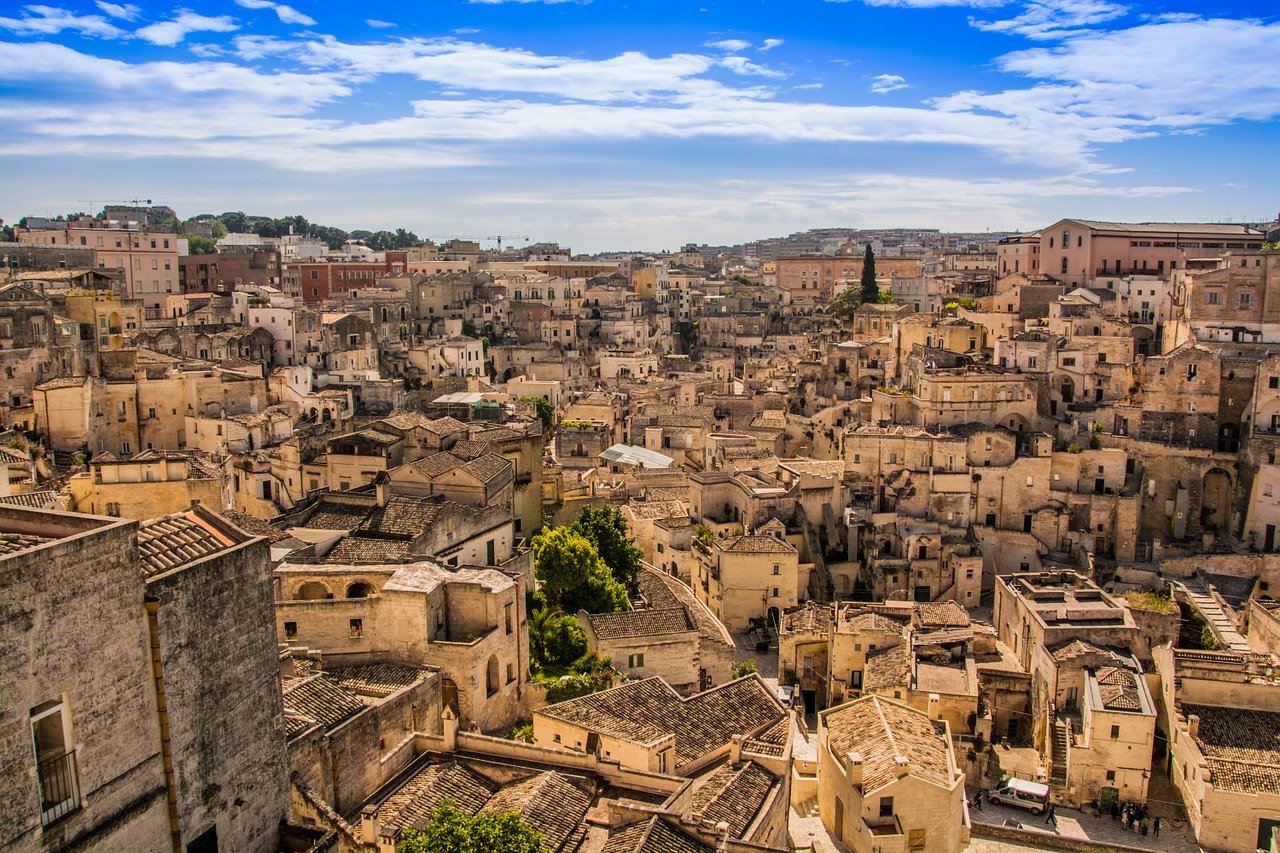
As we have already mentioned, Matera is a city situated in the Basilicata region, in southern Italy, famous for its ancient neighbourhoods built into the limestone, known as the “Sassi”. These ancient neighbourhoods stretch along the slopes of the hills, forming a network of houses, caves, stairways, courtyards and churches that blend seamlessly with the surrounding rock.
Tourism in Matera has grown significantly in recent years, thanks to the city’s designation as European Capital of Culture in 2019 and the designation of the “Sassi di Matera” as a UNESCO World Heritage Site in 1993. The city has seen a steady increase in visitor numbers, drawn by its unique beauty and rich history.
The main tourist attractions in Matera include the Sassi districts, where you can take a stroll through the ancient streets and see the sacred houses, temples and churches carved into the rock. There are also many museums, including the National Museum of Medieval and Modern Art of Basilicata and the Museum of Rural Life.
Matera is also famous for its traditional cuisine, which makes use of fresh local produce such as Matera bread, buffalo mozzarella and Aglianico del Vulture wine. Many tourists take part in guided food tours to discover the local delicacies.
Generally speaking, visiting Matera is a great opportunity to discover a side of Italian history and culture that is often overlooked. The city’s hotels and accommodation providers offer high-quality accommodation to suit all needs.
Some of the places to visit in Matera
- The Sassi of Matera (UNESCO World Heritage Site)
- Matera Cathedral, or the Cathedral of Santa Maria della Bruna and Sant’Eustachio
- The Church of San Pietro Barisano
- The Church of St John the Baptist
- The Lanfranchi Palace
- The Cave House in Vico Solitario
- Tramontano Castle
- The Tibetan Bridge over the Gravina di Matera
- The ancient Via Appia and the archaeological site of the Parco delle Chiese Rupestri
Typical dishes from Matera include:
Matera bread – a bread typical of the city, known for its octopus-like shape.
Handmade cavatelli – a fresh pasta shaped like small shells, usually served with a tomato and ricotta sauce.
Crapiata – a traditional soup from Matera made with tomatoes, peppers, onions, potatoes, pancetta and pecorino cheese.
Matera-style lamb – roast lamb with potatoes, garlic, rosemary and lemon.
Cruschi peppers – dried and fried red peppers, usually used as a condiment for pasta, bread and salads.
Matera-style focaccia – a savoury focaccia made with tomatoes, peppers, onions and cheese.
Cialledda – a salad made with stale bread, tomatoes, cucumber, oregano and onion.
Buccunotti – small, loaf-shaped sweets filled with chocolate, almonds and honey.
Ciambotta – a vegetable soup made with peppers, aubergines, courgettes and potatoes.
Altamura bocconotto – a sweet filled with almond cream or chocolate.




